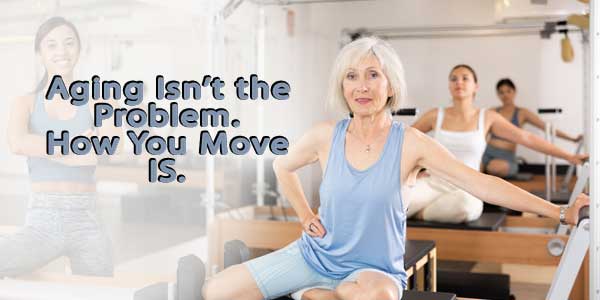
Here’s the “why” of how you move today shapes how you age tomorrow
Aging is inevitable. Decline is not.
One of the most powerful—and often underutilized—tools we have to support long-term health is movement. And more specifically, intentional, form-focused movement like Pilates.
Research shows that Pilates is not just effective for general fitness—it directly supports healthy aging, functional independence, and chronic disease management.
Pilates and Healthy Aging: What the Research Says
Pilates has been shown to improve strength, flexibility, balance, and overall function in older adults, all of which are key markers of healthy aging.
In fact, systematic reviews suggest Pilates can:
- Improve functional capacity
- Increase independence
- Enhance the quality of life in aging populations
That’s not just “feeling better”—that’s maintaining the ability to move through life without limitation.
Reducing Pain and Managing Musculoskeletal Conditions
One of the most studied areas of Pilates is its impact on chronic low back pain—a major issue as we age.
Research shows that Pilates:
- Significantly reduces pain
- Improves functional ability
- Enhances the quality of life in people with chronic low back pain
This is especially important because pain often leads to less movement, which accelerates decline.
Balance, Falls, and Independence
Falls are one of the leading risks as we age.
Pilates has been shown to:
- Improve balance and postural stability
- Enhance gait and mobility
- Reduce risk factors associated with falls
Because Pilates strengthens the deep stabilizing muscles, it directly supports the body’s ability to react, adjust, and stay upright.
Bone Health and Chronic Disease Risk
Emerging research suggests Pilates may:
- Help maintain bone density
- Improve body composition
- Reduce risk factors associated with chronic disease
Since conditions like osteoporosis, diabetes, and cardiovascular disease are closely tied to movement, load, and metabolism, this matters more than most people realize.
Whole-Body Wellness (Not Just Muscles)
Pilates doesn’t just affect the physical body.
Studies show it can improve:
- Physical wellness
- Emotional and mental health
- Social and overall life satisfaction
This aligns with what we see every day—when people move better, they don’t just feel stronger… they feel more like themselves.
Why Pilates Works (This Is the Key)
Pilates is different from many forms of exercise because it focuses on:
- Controlled, precise movement
- Alignment and joint positioning
- Deep stabilizing muscles
- Breath and nervous system regulation
This makes it especially effective for aging bodies, where the goal isn’t just intensity—it’s efficiency and adaptability.
The Bigger Picture
When you look across the research, a pattern becomes clear:
-
-
- Pilates improves how the body moves
- Better movement improves function
- Better function reduces risk of disease and decline
-
Different outcomes. Same underlying mechanism.
The Takeaway
You don’t need to do more.
You need to move better, consistently, and with intention.
Because aging well isn’t about avoiding change—
It’s about maintaining the ability to adapt to it.
How We Apply This at Cornerstone Pilates
At Cornerstone, we teach through
The Cornerstone Method: Pilates Through the Fascial Lens
Which means:
- Form comes first
- The body is trained as a connected system
- Movement is intentional, not just repetitive
Because it’s not just about doing Pilates.
It’s about doing it in a way that actually supports your body long-term.
Ready to Support Your Future Body?
Start where you are.
Move with intention.
Stay consistent.
Your future body is built by what you do today. 💛